
More Than Enough: When Five Loaves and Two Fish Met the Hands of Jesus
They were hungry—thousands of them. The sun was dipping low, the crowd was restless, and all the disciples had were five loaves and two fish.

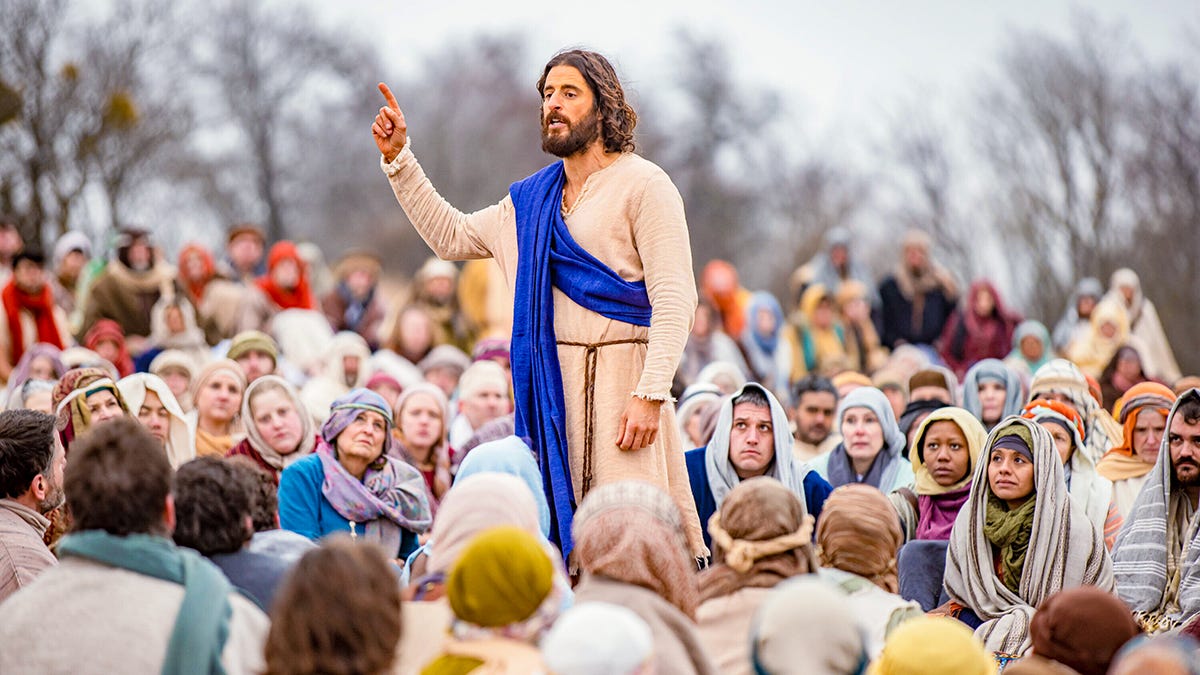
"Taking the five loaves and the two fish and looking up to heaven, he gave thanks and broke the loaves. Then he gave them to his disciples to distribute to the people. He also divided the two fish among them all." - Mark 6:41
The Mathematics of Miracle
We live in a world obsessed with quantifying sufficiency. How much money in the bank equals security? How many resources must we stockpile to feel prepared? What credentials do we need to be qualified? Our human calculations constantly revolve around the question: Do I have enough?
But there exists a divine mathematics that defies our limited equations. I call it the Equation of the Savior.
It looks something like this:
What We Have (No Matter How Small) + Surrender to Jesus = More Than Enough
This equation isn't theoretical—it's demonstrated powerfully in the story of the five loaves and two fish.
A Boy's Lunch Meets Divine Provision
Picture the scene: thousands of hungry people gathered to hear Jesus teach. The disciples, concerned about the logistics, suggest sending everyone away to find food. But Jesus has a different solution: "You give them something to eat."
The disciples' response is pure human calculation: "That would take more than half a year's wages! Are we to go and spend that much on bread and give it to them to eat?" (Mark 6:37)
Then comes the pivotal question: "How many loaves do you have?"
All they could find was a young boy willing to offer his small lunch—five barley loaves and two small fish. By any reasonable human assessment, this was laughably insufficient. The mathematics simply didn't work.
Five loaves + two fish ≠ feeding 5,000+ people
But this is precisely where the Equation of the Savior begins to operate.
The Missing Variable: Divine Multiplication
What the disciples failed to account for was the multiplying power that comes when we place our insufficiency in Jesus' hands. Notice the sequence in Scripture:
Jesus took the insufficient offering
He gave thanks for it (acknowledging God's provision)
He broke it (the breaking that precedes blessing)
He gave it to the disciples to distribute
The miracle didn't happen in massive, sudden abundance. It occurred in the distribution—in the faithful giving of what seemed too little. As they gave what they had, it never ran out. The little became much. The insufficient became overflow.
And the result? "They all ate and were satisfied, and the disciples picked up twelve basketfuls of broken pieces of bread and fish." (Mark 6:42-43)
That's the equation at work:
Five loaves + Two fish + Jesus = Food for thousands, with leftovers!
Where Are You Facing "Not Enough"?
Perhaps today you're staring at your own version of "five loaves and two fish":
A bank account that doesn't match your needs
Talents that seem inadequate for your calling
Time that feels too limited for your responsibilities
Energy that feels depleted in the face of challenges
Patience wearing thin with difficult relationships
The world's equation would tell you: "What you have isn't enough. Give up. Find another way."
But the Equation of the Savior invites a different response,
"Place what little you have in your hands, and watch what Jesus can do with it."
Surrender: The Catalyst in the Equation
The pivotal moment in this miracle wasn't the quantity of bread and fish. It was the moment of surrender—when that young boy offered his lunch, and when the disciples placed it in Jesus' hands.
Surrender is the catalyst that activates divine mathematics. It's the moment we stop calculating whether we have enough and simply open our hands to give what we have.
The miracle didn't depend on the boy's lunch—it depended on Jesus. But Jesus chose to work through what was willingly surrendered to Him.
Living in the Overflow
The most astounding part of this story isn't just that everyone ate—it's that there were twelve baskets of leftovers. When Jesus multiplies, He doesn't just meet the minimum requirement. He creates abundance.
This is perhaps the most beautiful aspect of the Equation of the Savior: scarcity doesn't just become sufficiency—it becomes overflow.
Where in your life do you need to apply this equation today?
Identify your "five loaves and two fish" - What limited resources do you have that seem insufficient?
Bring them to Jesus in surrender - Acknowledge that what you have comes from Him and belongs to Him.
Give thanks for what you have - Gratitude positions our hearts to recognize God's provision.
Begin distributing what you have - Don't wait for abundance before you start giving and serving.
Watch for the miracle in the giving - The multiplication often happens in the process of faithful distribution.
Scarcity Meets Sufficiency
The feeding of the five thousand reminds us that in God's economy, the question is never, "Do you have enough?" It's always, "Are you willing to offer what you have?"
When our "not enough" meets the hands of Jesus, it always becomes "more than enough." That's the beautiful paradox in the Equation of the Savior.
What looks like scarcity to human eyes becomes divine sufficiency when surrendered to the One who can multiply beyond our imagination.
Today, whatever feels insufficient in your hands, remember—those are exactly the things Jesus wants you to give Him. For when scarcity meets the Savior, miracles await.
"Now to him who is able to do immeasurably more than all we ask or imagine, according to his power that is at work within us..." - Ephesians 3:20
Your fellow seeker in the divine equation,
Anand
This is powerful. How INCREDIBLE is our God! And the Scripture in the end from Ephesians tied everything together perfectly.